Dulaglutide
GLP-1 Receptor Agonist (Long-acting)
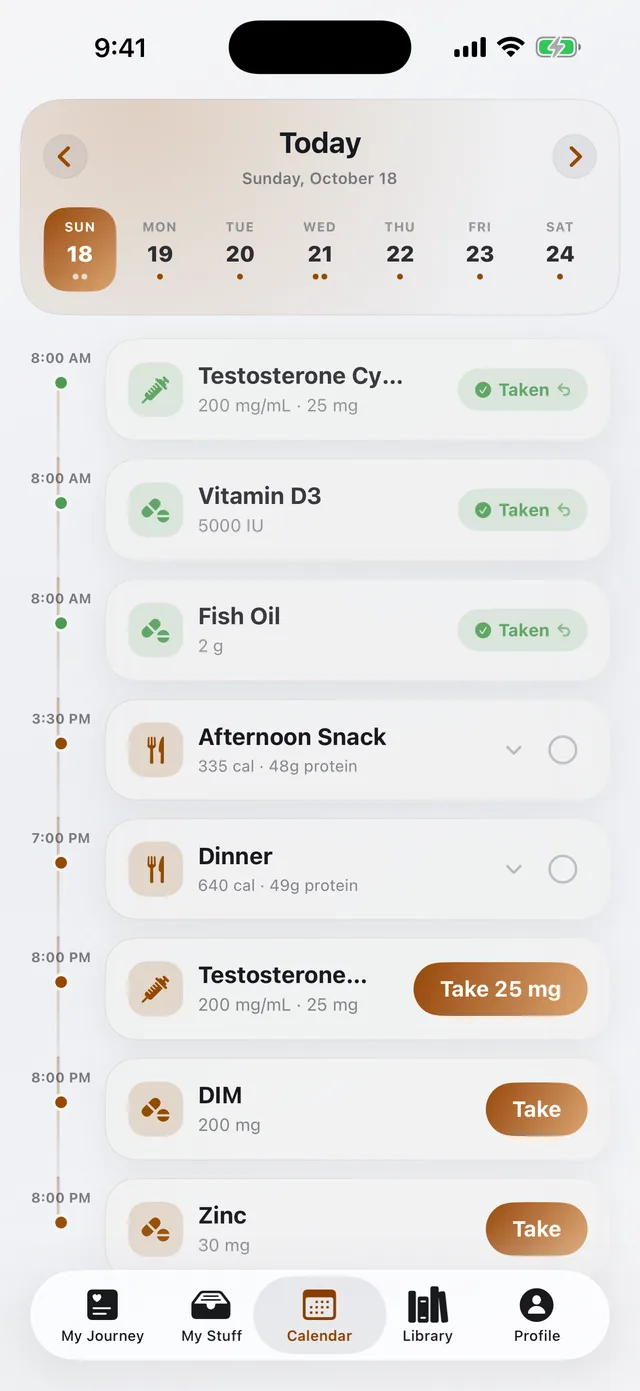
Dulaglutide is a long-acting GLP-1 receptor agonist composed of two GLP-1 analog chains fused to an IgG4 Fc fragment. My TRT App lets you log Dulaglutide as a compound alongside your protocol. Most compounds on these pages are research chemicals, not FDA-approved medications, so talk to a clinician before using any of them.
What it is
Dulaglutide is a long-acting GLP-1 receptor agonist composed of two GLP-1 analog chains fused to an IgG4 Fc fragment. In research settings it’s used to study glucose homeostasis, gastric emptying, appetite regulation, and cardiometabolic outcomes.
Investigated for improving glycemic control, reducing cardiometabolic risk markers, and modeling weight/appetite pathways via incretin signaling.
At a glance
| Type | GLP-1 Receptor Agonist (Long-acting) |
|---|---|
| Category | Peptide / Incretin Mimetic |
| Half-life | Approximately ~120 hours (~5 days) |
| Delivery | Once-weekly subcutaneous injection (prefilled pen formats in clinical use; dose and device vary by study/protocol). |
Mechanism
Activates GLP-1 receptors to enhance glucose-dependent insulin secretion, suppress inappropriate glucagon release, slow gastric emptying, and reduce appetite through central and peripheral pathways.
What it has been studied for
- Improved fasting and postprandial glucose
- Reduced A1c in type 2 diabetes models
- Decreased appetite and body weight in study populations
- Potential cardiovascular risk-marker improvements
Reported in research or user reports. Not a promise of results; human evidence is often limited.
Reported side effects
- Nausea, vomiting, diarrhea, or constipation
- Abdominal pain or decreased appetite
- Injection-site reactions
- Rare: pancreatitis, gallbladder disease
- Hypoglycemia when combined with insulin or sulfonylureas
- Boxed warning (rodent): thyroid C-cell tumors; contraindicated with personal/family history of MTC or MEN2 in clinical use contexts
Often listed with
Research notes
Human prescription biologic; use in controlled research settings with appropriate monitoring (glucose, A1c, renal/hepatic function, triglycerides). Assess GI tolerance and pancreatitis/gallbladder risk factors in study designs.
Know what you are logging.
If you and your clinician decide to use Dulaglutide, log each dose in My TRT App so the record is there when you review how it went.
Readers who source research peptides sometimes ask where. VishChems is an affiliate partner: code FOREVER25 gives you 25% off and we may earn a commission. My TRT App does not sell peptides.
Last reviewed 2026-06-04. Education only, not medical advice. Always talk to a qualified clinician.
Log it next to your protocol.
Add it as a compound, track every dose and see it on the same calendar as your TRT.