Levothyroxine (T4)
Thyroid Hormone Replacement
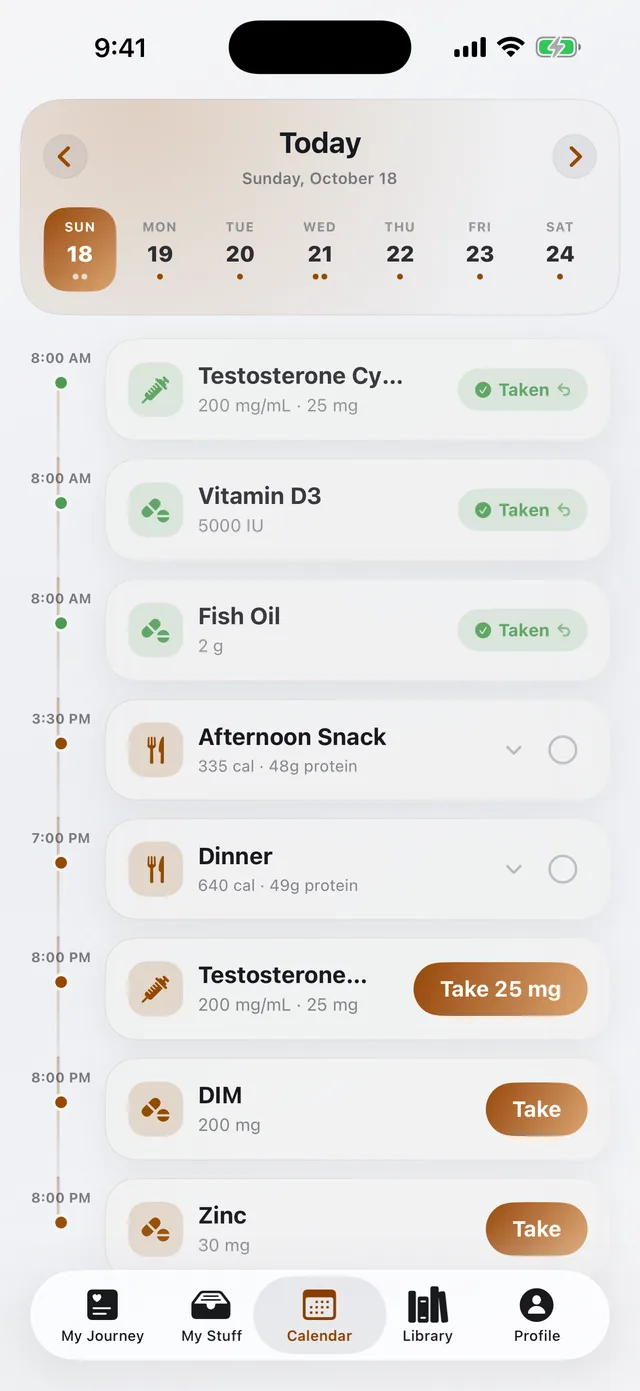
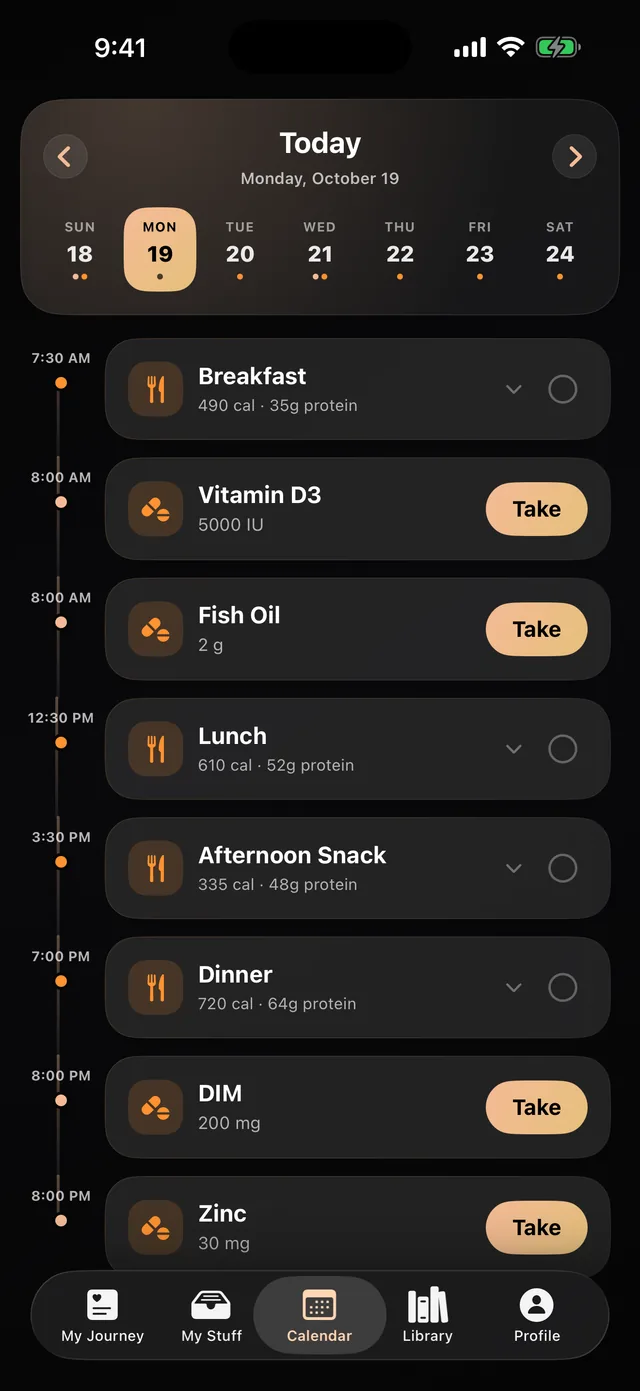
Levothyroxine is a synthetic form of the thyroid hormone thyroxine (T4), used as a long-term replacement therapy for hypothyroidism. My TRT App lets you log Levothyroxine (T4) as a compound alongside your protocol. Most compounds on these pages are research chemicals, not FDA-approved medications, so talk to a clinician before using any of them.
What it is
Levothyroxine is a synthetic form of the thyroid hormone thyroxine (T4), used as a long-term replacement therapy for hypothyroidism.
Prescribed for hypothyroidism, myxedema coma, subclinical hypothyroidism, and TSH suppression in thyroid cancer or goiter; off-label in some research for metabolic or weight-related studies.
At a glance
| Type | Thyroid Hormone Replacement |
|---|---|
| Category | Endocrine / Prescription Hormone |
| Half-life | Approximately 6–7 days (up to ~9–10 days in hypothyroid patients) :contentReference[oaicite:3]{index=3}. |
| Delivery | Oral capsule; also available as injected solution for IV use. |
Mechanism
Serves as a prohormone that converts peripherally to the active T3; T3 enters the nucleus and regulates gene transcription via thyroid hormone receptors :contentReference[oaicite:1]{index=1}.
What it has been studied for
- Normalizes thyroid hormone levels and basal metabolism
- Alleviates symptoms of hypothyroidism (fatigue, cold intolerance, weight gain)
- Supports fetal development in pregnancy
- Suppresses TSH in cases of goiter or thyroid cancer
Reported in research or user reports. Not a promise of results; human evidence is often limited.
Reported side effects
- Symptoms of over-replacement: palpitations, anxiety, insomnia
- Weight loss or gain
- Hair loss, heat intolerance, tremor
- Long-term overtreatment may lead to atrial fibrillation and bone density loss :contentReference[oaicite:2]{index=2}
- Allergic reactions are rare
Often listed with
Research notes
Once-daily dosing achieves relatively stable levels after ~6 weeks. Protein binding >99%; adjustment needed for drugs/foods that affect absorption (e.g., calcium, iron, coffee) :contentReference[oaicite:4]{index=4}. Over-treatment in elderly increases risk of osteoporosis and atrial fibrillation :contentReference[oaicite:5]{index=5}.
Know what you are logging.
If you and your clinician decide to use Levothyroxine (T4), log each dose in My TRT App so the record is there when you review how it went.
Readers who source research peptides sometimes ask where. VishChems is an affiliate partner: code FOREVER25 gives you 25% off and we may earn a commission. My TRT App does not sell peptides.
Last reviewed 2026-06-04. Education only, not medical advice. Always talk to a qualified clinician.
Log it next to your protocol.
Add it as a compound, track every dose and see it on the same calendar as your TRT.