Serum Iron
Also called Iron.
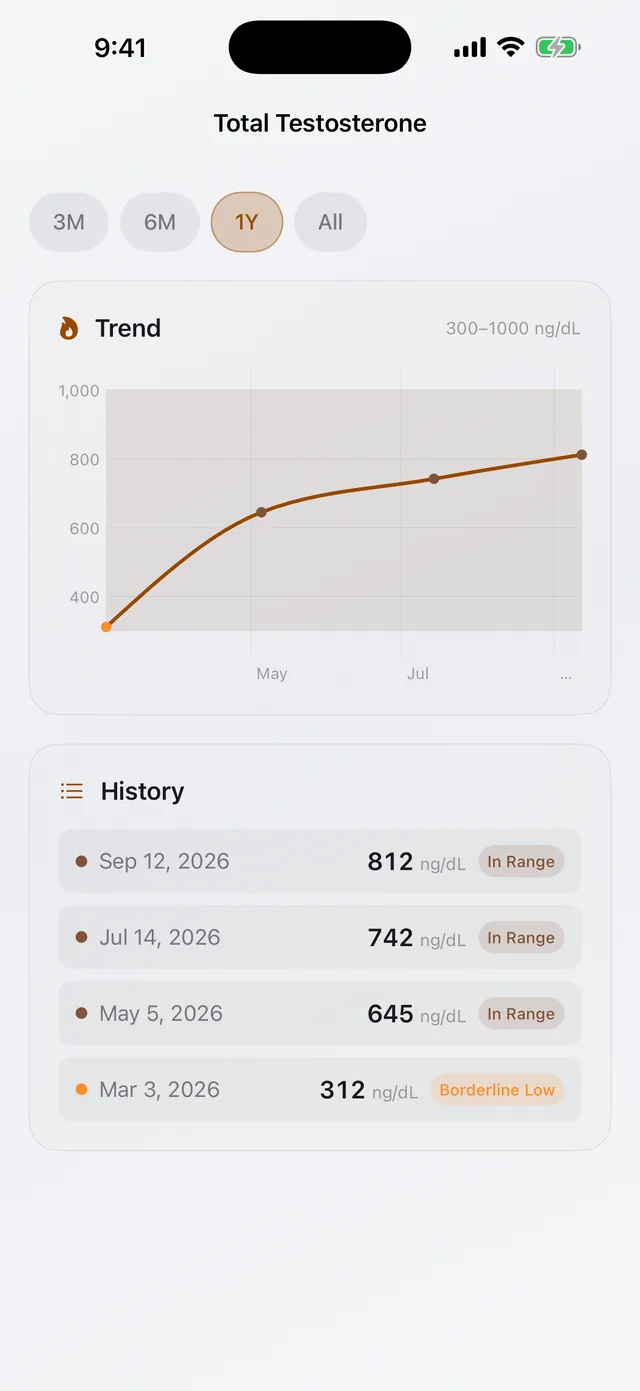
Serum iron measures circulating iron, but levels fluctuate diurnally. In My TRT App you can log Iron after each draw and see it next to your dose history. Each lab sets its own reference range, so compare against the range printed on your report.
What it is
Serum iron measures circulating iron, but levels fluctuate diurnally. Ferritin and transferrin saturation are more reliable.
Reference range
| Reference range | Unit |
|---|---|
| 60 – 170 | μg/dL |
Reference: 60–170 μg/dL.
What moves it
- Hemochromatosis, recent iron supplement, hemolysis.
- Iron deficiency, chronic inflammation.
On TRT
Use alongside ferritin and TIBC for a full iron picture.
Related markers
FAQ
What does serum iron measure?
Serum iron measures the amount of iron actually circulating in your blood at the moment of the draw, most of it bound to the transport protein transferrin. It's a single-moment snapshot rather than a measure of your reserves, so it can look normal even when stored iron is low. That's why it's interpreted alongside ferritin, TIBC, and transferrin saturation rather than on its own.
What is a normal serum iron level in men?
A typical adult male reference range is roughly 65–175 µg/dL, with some variation by lab. Because serum iron swings widely through the day and with recent meals or supplements, the single number matters less than how it fits with the rest of the iron panel. Compare against your own lab's range and look at the full picture.
Why does serum iron fluctuate so much during the day?
Serum iron follows a pronounced daily (diurnal) rhythm, often peaking in the morning and dropping later in the day, and it also rises after iron-containing meals or supplements. Swings of a large percentage within a single day are normal. This variability is exactly why ferritin and transferrin saturation are considered more reliable indicators of iron status than a lone serum iron value.
Should I fast before an iron test?
Many clinicians prefer a morning, fasting draw for serum iron to reduce the noise from diurnal variation and from recent food or supplements. Iron pills in particular can transiently spike the result, so labs often ask you to hold supplements beforehand. Follow your provider's specific instructions, and try to test under the same conditions each time so your trend is comparable.
How does serum iron fit with TIBC and transferrin saturation?
Serum iron is the numerator in the transferrin saturation calculation: TSAT is serum iron divided by TIBC, the total capacity of transferrin to carry iron. On its own serum iron is hard to interpret, but paired with TIBC it tells you how full your transport system is. Reading iron, TIBC, TSAT, and ferritin together is what separates iron deficiency from iron overload.
Read it in context, not alone.
One Iron result is a snapshot. Logging each result in My TRT App next to your dose timing gives you and your prescriber a clearer picture over time.
Last reviewed 2026-09-02. Education only, not medical advice. Always talk to your prescriber.
Log this marker after every draw.
Scan your lab report and see each result on a trend line.