White Blood Cell Count
Also called WBC.
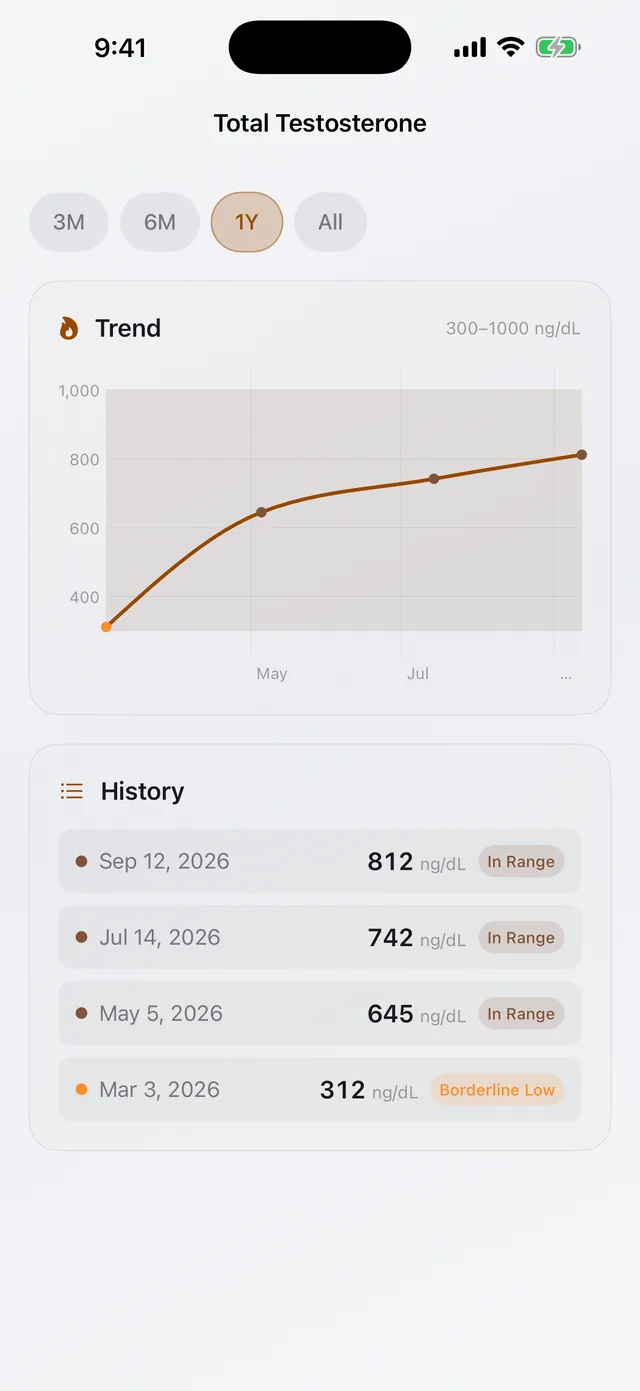
White blood cell count measures your immune cells. In My TRT App you can log WBC after each draw and see it next to your dose history. Each lab sets its own reference range, so compare against the range printed on your report.
What it is
White blood cell count measures your immune cells. TRT doesn't directly affect WBC; persistent abnormalities warrant follow-up unrelated to therapy.
Reference range
| Reference range | Unit |
|---|---|
| 4.5 – 11 | K/μL |
Adult reference: 4.5–11.0 K/μL.
What moves it
- Acute infection, inflammation, stress, steroids, leukemia (rare).
- Viral infection, autoimmune disease, bone marrow issues, some medications.
On TRT
TRT shouldn't change WBC. Persistent abnormalities need workup independent of testosterone therapy.
Related markers
FAQ
What is WBC on a CBC blood test?
WBC stands for white blood cell count — the total number of immune cells circulating in your blood, reported in thousands per microliter (K/µL). On a complete blood count it's the headline number for your immune system, and it's often broken down further into a differential (neutrophils, lymphocytes, monocytes, and so on). It rises with infection and inflammation and falls with certain viral illnesses and marrow problems.
What does "WBC Auto" mean on my lab report?
"Auto" just means the count was measured automatically by the analyzer rather than counted by hand under a microscope. "WBC Auto" is simply your white blood cell count as tallied by the machine — it's the standard method and isn't a different or more concerning test. If a result looks unusual, the lab may follow up with a manual ("WBC Manual") count for confirmation.
What is a normal white blood cell count?
The normal adult reference range is roughly 4.5–11.0 thousand cells per microliter (K/µL). Exact cutoffs vary slightly by lab. Values inside that window are considered normal; the trend and any symptoms matter more than a single reading near the edges.
What do high or low WBC mean?
A high WBC (leukocytosis) most commonly reflects an acute infection or inflammation, and can also follow physical stress, exercise, smoking, or corticosteroid use; markedly high counts occasionally point to a bone-marrow or blood disorder. A low WBC (leukopenia) can follow a viral infection, certain autoimmune conditions, some medications, or a marrow issue. A one-off mild abnormality is often transient — a persistent one deserves a repeat draw and follow-up.
Does TRT affect white blood cell count?
No — testosterone therapy doesn't meaningfully move your WBC. TRT's measurable effect is on the red-cell side (hematocrit, hemoglobin, RBC), not your immune cells. A persistently abnormal WBC on TRT should be worked up on its own merits, independent of your testosterone. Keep in mind that hard exercise, stress, or a brewing infection around the time of your draw can transiently raise the count.
Read it in context, not alone.
One WBC result is a snapshot. Logging each result in My TRT App next to your dose timing gives you and your prescriber a clearer picture over time.
Last reviewed 2026-09-02. Education only, not medical advice. Always talk to your prescriber.
Log this marker after every draw.
Scan your lab report and see each result on a trend line.